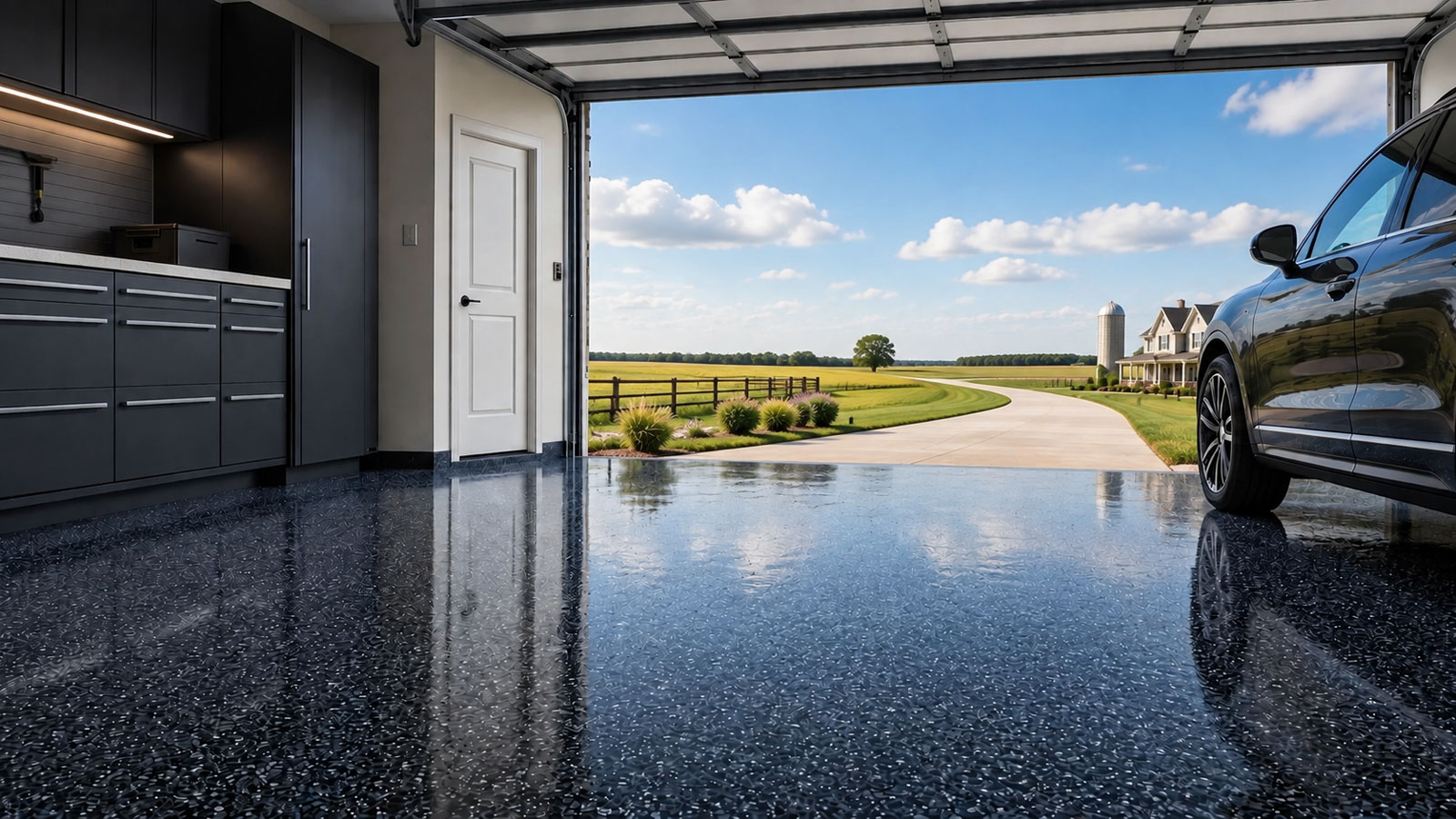
Garage Floor Coating in Melissa, TX
Floor Coating Services in Melissa, TX
Melissa is growing rapidly on the northern edge of Collin County, and its development planning documents quantify that expansion rather than simply labeling it a booming suburb. The city adopted a comprehensive-plan update in February 2024, building on a 2015 plan, and a subsequent infrastructure study used a 13 percent population-growth assumption for its planning scenario. Those figures point to continued residential construction, but they do not establish when an individual garage slab was poured or whether its surface is ready for coating.
Melissa's planning materials address utility systems, transportation, parks and a changing city center. These different land-use settings imply varied garage sizes, previous finishes and workshop use, but each floor must be examined on its own merits. An installer should ask about old sealer or paint, patched joints, oil contamination and any signs of moisture before specifying epoxy, polyaspartic or flake floors.
North Texas summer heat and changing rainfall conditions add practical scheduling and maintenance issues. Sunlit garage entrances may become hotter than indoor slab areas, while driveway slopes and gutters determine how rainwater approaches a particular threshold. Product choice should follow actual substrate conditions, preparation methods, desired texture and a realistic parking-return schedule.
Local Market Insight
Melissa's February 2024 comprehensive plan and published infrastructure projections use quantified growth assumptions. The resulting variety of properties requires project-specific slab evaluation rather than assumptions based on construction demand.
What Affects Garage Floor Coating Cost in Melissa?
Melissa's changing housing stock creates real variation in floor preparation. A newly occupied home may still have finishing treatments; an established garage may have oil, cracks or old paint. Two equal-sized floors can therefore require very different work.
A contractor should identify the surface condition, repair needs, any wetting history and the complete coating system before discussing an installation date or final quote.
- Finishing compounds: New or apparently untreated slabs can have sealer, residue or other surface treatments requiring grinding or removal before a coating bonds.
- Repairs and joints: Construction-era assumptions do not substitute for inspecting patched joints, cracks, spalls and other damage before choosing a repair method.
- Driveway water history: Melissa's infrastructure studies do not prove drainage problems at any house. Check gutters, grade, wetting history and slab condition individually.
- Garage use and oil: Vehicles, maintenance work and stored materials can leave residues needing additional cleaning and surface profiling.
- Configuration: Garage bays, walls, steps, drains and storage can change prep labor and edging beyond straightforward square footage.
- System and cure time: Flake density, texture, topcoat and hot-weather installation limits influence the complete project cost and time before vehicles can return.
Call for a clear, project-specific estimate—or request one online.
Melissa's Planning Numbers and Actual Garage Condition
Melissa's comprehensive planning record includes an April 28, 2015 adoption and a February 2024 update. Its 2025 impact-fee-related documentation used a 13 percent population-growth rate for projections and cited a 2024 plan scenario anticipating 42,992 residents within city limits by 2035. These are planning assumptions, not guaranteed outcomes. They explain why Melissa's housing environment includes significant development activity without saying anything definitive about an individual concrete slab.
A recently completed garage may still have compounds, sealers or dust that must be removed before an epoxy or polyaspartic system is applied. A garage in an earlier phase of development may have patches, old paint or parked-vehicle stains. The correct preparation process should be based on inspection, not a rule that every newer floor can simply be coated.
The city's planning also covers utilities and transportation as growth proceeds. Road access and property arrangements differ, which can affect where homeowners temporarily park during a coating job and how much equipment or storage must be moved. These staging issues belong in the estimate alongside grinding, repairs and the coating layers.
Take photographs of cracks, existing finishes and damp spots and tell the estimator about past work. A written scope should distinguish surface preparation and repair from optional decorative texture. That is especially important when comparing offers that all use the same product category but involve different amounts of labor.
North Collin Heat, Rainfall and Melissa Floor Choices
Melissa shares the hot summer environment of the North Dallas region. Garage thresholds exposed to direct sun can be hotter than shaded interior concrete. The installer should observe actual surface conditions and follow the manufacturer's guidance for application and curing rather than selecting a date based solely on an advertised fast return to service.
Stormwater concerns should be evaluated just as specifically. City growth and drainage planning do not establish whether runoff enters any particular building. Check the driveway grade, gutter discharge, evidence of past water at the door and any persistent interior dampness. Some signs may justify moisture testing, while an exterior runoff problem can require a separate trade.
A sound coating makes cleaning easier than porous bare concrete in many garages, but it cannot redirect rainwater or eliminate cleaning. Gravel, dust and water tracked in by vehicles still need attention. Homeowners choosing decorative flake should compare textured and smoother finishes for footing, sweeping and occasional washing.
Different use patterns matter too. An ordinary parking garage, a woodworking or mechanical hobby space, and a small business floor may require different abrasion, chemical and impact considerations. Tell the installer what equipment crosses the floor and what spills are plausible. The full system and proper preparation matter more than a slogan about epoxy versus polyaspartic.
When reviewing the final estimate, require a realistic sequence: clearing the space, surface profiling, repairs, optional tests, coating layers and cure. The plan should identify the first safe time to walk on the floor and when parking can resume.
Frequently Asked Questions
Does Melissa's rapid growth mean all garage floors are new?
No. The city has adopted growth plans and infrastructure forecasts, but those do not date or describe individual garage slabs. Inspect concrete and existing finishes before assuming little preparation is needed.
Are brand-new Melissa slabs ready for epoxy?
Not automatically. New concrete may have surface treatments, residue or other conditions that affect adhesion. The installer should follow the complete system's preparation and cure requirements.
Should I worry about rainfall at the driveway?
Look for actual water flowing toward the threshold or recurring dampness inside. A citywide drainage or growth forecast does not prove a property problem, and coatings do not repair exterior grading.
Is polyaspartic always faster for parking?
Some systems have short return-to-service periods, but the complete product and actual slab temperature control timing. Ask the installer to give a realistic cure schedule.
What does a detailed Melissa coating quote cover?
It should specify grinding, removal of incompatible finishes, concrete repairs, coating layers, texture, vertical edges, excluded drainage work and the time before foot or vehicle traffic resumes.