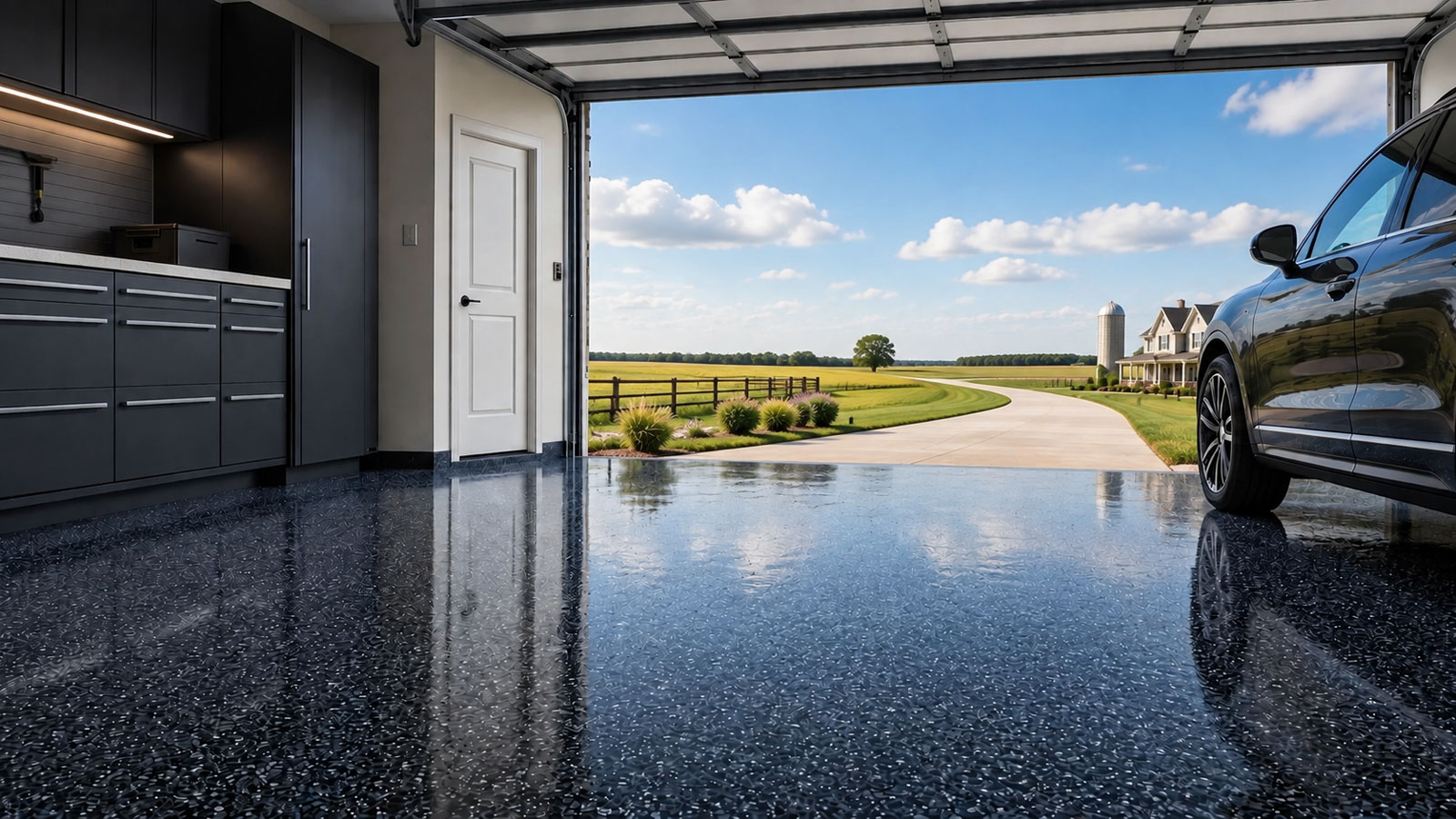
Garage Floor Coating in McKinney, TX
Floor Coating Services in McKinney, TX
McKinney's development landscape is notably broad. The ONE McKinney 2040 Comprehensive Plan, adopted October 2, 2018, covers roughly 116 square miles including an approximately 51-square-mile extraterritorial jurisdiction. Its individual planning districts include Established Community, Town Center, Trinity Falls, East Fork and Northridge. This is not a single generation of identical suburban garages. Different properties can have concrete with earlier coatings, repairs, construction residues or varying uses, so a project estimate should begin with the real slab.
The city has also formally amended its comprehensive plan several times, including November 2024, reflecting ongoing changes to land-use priorities and growth. That metropolitan-scale development context makes garage access, interior configuration and intended use important questions, but it does not tell a contractor whether a particular floor is sound. A recently built garage can still have a sealer or finishing compound, while an established property's slab may have been replaced after the home was built.
North Texas weather provides a separate theme: long hot periods, pronounced sun exposure at open garage doors and rainfall that can bring dirt and water across driveways. Before selecting epoxy or polyaspartic, inspect cracks, prior finishes, oily spots and possible moisture concerns. The best coating plan explains mechanical preparation, complete system layers, desired traction and when vehicles can return.
Local Market Insight
McKinney's 2040 plan distinguishes Established Community, Town Center, East Fork and Trinity Falls within a roughly 116-square-mile planning area. Garage condition and water-entry patterns still require direct property inspection.
What Affects Garage Floor Coating Cost in McKinney?
Within McKinney's varied planning districts, two equally sized garages can need different treatment. Old paint, saw-cut joints, worn patches, door thresholds and other features determine preparation more accurately than the neighborhood name.
A contractor should explain surface profiling, repairs, any moisture assessment, the proposed complete coating system and curing time. The useful comparison is a written scope rather than a generic price assigned to every two-car garage.
- Prior finishing materials: A garage floor may have cured bare, been sealed, or received paint or epoxy. The amount of stripping and grinding should be based on actual material and adhesion.
- Cracks and repairs: Joints, previous patches and crumbling edges require attention before coating. A serious structural issue should not be hidden beneath a decorative finish.
- Driveway and entry conditions: McKinney's planning area encompasses varied districts, but local drainage is determined lot by lot. Check runoff at the door and any wetting history.
- Vehicle and work use: Daily parking, a home shop or a business floor have different oil, rolling load, cleaning and downtime needs. Those differences can change the preparation and chosen system.
- Floor configuration: Stem walls, drains, steps, extra bays and awkward storage can change installation effort even when measured square footage is identical.
- Coating finish and timing: Decorative-flake density, traction, sun exposure and North Texas summer curing conditions influence materials and the vehicle-return schedule.
Call for a clear, project-specific estimate—or request one online.
One McKinney 2040 and the Concrete Under Different Homes
ONE McKinney 2040 was originally adopted October 2, 2018 and has undergone subsequent amendments, including November 19, 2024. The city says the plan addresses approximately 116 square miles when its extraterritorial jurisdiction is included, and it identifies multiple individual districts. Established Community and Town Center sit within the same planning framework as Trinity Falls, East Fork and other growth areas. Those are meaningful distinctions for residential character and development history, not a diagnostic test for a garage slab.
Before selecting a coating, establish whether the actual concrete is bare, has paint or sealer, or carries an aging epoxy finish. Ask about peeling under hot tires, stained vehicle parking spots, patch repairs and recurring damp areas. A newer slab might still need grinding because finishing material can interfere with adhesion, while a sound older slab might need comparatively little work.
The garage's use matters too. A McKinney household storing bicycles and parking cars has different durability priorities from a hobbyist working with equipment and chemicals. Commercial and shop concrete should be specified around traffic, cleanability, chemical exposure and downtime. The coating type is only one part of the decision alongside adequate preparation and correct installation.
Request proposals that distinguish cleaning and profiling from crack repair, coating layers, decorative texture, edge work and cure. Photographs of wear and a history of previous finishes can help contractors provide comparable estimates, especially where the intended return-to-parking date is important.
North Texas Heat, Water at the Entry and Everyday Maintenance
McKinney sits in North Texas, where hot summers make the garage door area a particular concern. Sun striking the outer part of the slab can create a different surface temperature than shaded concrete toward the back of the garage. The installer needs to follow the selected system's manufacturer conditions for preparation, application and curing rather than rely only on a generic promise of fast return to service.
Rain is another practical issue, but city growth and comprehensive plans cannot establish moisture beneath a private slab. When water has appeared at the threshold, determine whether it came from roof gutters, sloped pavement, washing, vehicle tires or another source. Persistent slab dampness may require further assessment; it should not be diagnosed solely from a neighborhood map or dismissed as cosmetic.
A sound coating can create a surface that is easier to sweep and wipe than porous unfinished concrete. It does not prevent stormwater from flowing toward a door, and it does not eliminate the need to clean oil, grit and other spills. Where a floor gets wet, compare smooth and textured flake finishes with an eye to traction and the cleaning method the homeowner prefers.
At an estimate, discuss any home workshop use, heavy shelving, storage that must be moved and whether the garage can remain empty long enough for installation and curing. A clear sequence includes inspection, grinding, repairs, any necessary moisture decisions, coating application and confirmation of when cars can return.
Different McKinney planning districts offer different property backgrounds, but the decisive evidence remains the concrete in front of the installer. Ask the contractor to demonstrate how the proposed scope responds to what was actually observed.
Frequently Asked Questions
Does an established McKinney neighborhood mean an old garage slab?
No. ONE McKinney 2040 distinguishes established and growth districts, but a garage can have been added or repoured. Inspect the actual concrete and finishes rather than infer their condition from the house's age.
Do new McKinney garages need surface preparation?
Yes. New-looking concrete can contain construction residues, sealer or finishing compounds. The installer should follow the selected coating system's surface-profile and moisture requirements.
Will epoxy stop rainwater at my garage doorway?
No. If water crosses the entry from the driveway or roof drainage, that cause should be addressed separately. A sound coating can make cleanup easier but does not redirect runoff.
Does summer heat influence a polyaspartic installation?
Potentially. Sun-exposed slab temperatures can differ from the shaded interior. The contractor should check actual application conditions and the product's curing and vehicle-return instructions.
What should a McKinney coating estimate include?
Ask for surface grinding, previous coating removal, repair allowances, finish and traction choices, complete system layers, edge work and the date vehicles may return. These details matter more than a generic product label.